


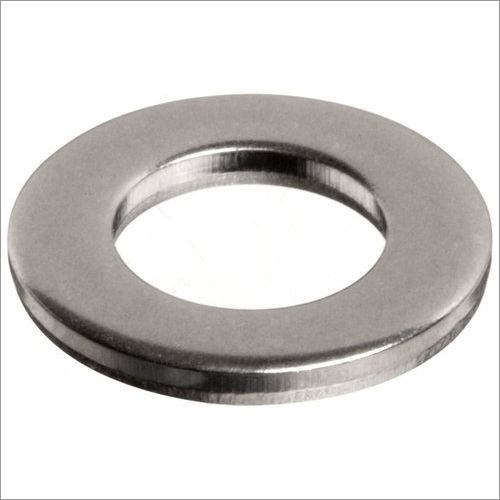
Railway Plain Washers
10.00 INR/Piece
Product Details:
- Load Capacity Suitable for Heavy Axle Load Kilograms (kg)
- Finish Bright / Black Oxide
- Material Carbon Steel
- Shape Flat Round
- Thickness 3mm to 8mm Millimeter (mm)
- Surface Treatment Hot Dip Galvanized / Zinc Plated
- Standard IS:2016 / DIN 125 / ASTM
- Click to View more
X
Railway Plain Washers Price And Quantity
- 5000 , , Piece
- 10.00 INR/Piece
Railway Plain Washers Product Specifications
- Bright / Black Oxide
- Flat Round
- IS:2016 / DIN 125 / ASTM
- 3mm to 8mm Millimeter (mm)
- Railway Track Fastening
- Hot Dip Galvanized / Zinc Plated
- Suitable for Heavy Axle Load Kilograms (kg)
- Carbon Steel
- 12mm to 38mm
- High
- Outdoor / Industrial
- 0.1mm
- 45-50 HRC
- Cold Forged / Machined
- 25mm to 70mm
- Gunny Bags / Carton Boxes
- -20C to +80C
Railway Plain Washers Trade Information
- 50000 , , Piece Per Month
- 30 Days
- All India
Product Description
We are acknowledged in the Indian and foreign markets as the largest supplier of Railway Plain Washers. Our high tech infra facilities help us in manufacturing the best grade of products for the customers that are beyond regular standards. From the dimensional perfection to the final finishing of each item, everything is handled by our team of trained professionals. They make sure that no defected piece is forwarded from our end. And, each batch of product has appropriate packaging to it.Railway Plain Washers are essential components for securing bolts, screws, and other fasteners. Our quality washers are made of steel and are heat-treated, providing lasting protection against rust and corrosion to simplify maintenance. Our plain washers provide superior strength and can handle heavy-duty loads, making them perfect for rail applications.
Rail Plain Washer Specifications:
- Material: Steel
- Surface Finish: Metal Coated
- Dimension/Size: 6 to 12
- Standards: ENI 4436, DIN 125
- Thread diameters: Range from 6 to 12
- Shape: Round
Precision and Durability for Railway Applications
These railway plain washers are meticulously manufactured using cold forging and machining techniques to ensure outstanding dimensional accuracy and mechanical strength. With a hardness rating of 45-50 HRC and high corrosion resistance, they deliver reliable performance in demanding outdoor and industrial environments. Their robust surface treatment further enhances longevity in railway track fastening projects.
Versatile and Reliable Fastening Solutions
Suitable for heavy axle loads, our washers can withstand rigorous mechanical stress and variable temperatures, making them ideal for railway and infrastructure projects. Their compatibility with international standards ensures trustworthy application across diverse settings, while multiple packing and finish options provide flexibility for exporters, manufacturers, and suppliers.
FAQs of Railway Plain Washers:
Q: How are railway plain washers manufactured to ensure high precision and durability?
A: Railway plain washers are produced using cold forging and machining processes. This helps achieve accurate dimensions with a tolerance of 0.1mm and ensures uniform hardness of 45-50 HRC. The manufacturing technique enhances the structural integrity required for railway applications.Q: What materials and surface treatments are used for these washers to resist corrosion?
A: These washers are made from carbon steel and given either a hot dip galvanized or zinc plated finish. These surface treatments offer high corrosion resistance, making the washers suitable for outdoor use in harsh environments.Q: When should I use railway plain washers in track fastening projects?
A: Railway plain washers are recommended whenever a secure and stable fastening is required for heavy axle loads, particularly in railway track installations. Their design and properties are suited for both new construction and upgrade projects where safety and longevity are crucial.Q: Where can these railway plain washers be used most effectively?
A: They are optimized for outdoor environments and industrial settings, especially in the fastening of railway tracks. Their high tolerance to temperature variations (-20C to +80C) and resistance to mechanical and environmental stress makes them ideal for rail infrastructure.Q: What standards do these washers comply with for assured quality?
A: Our railway plain washers meet IS:2016, DIN 125, and ASTM standards. Compliance with these international norms guarantees reliable performance, dimensional consistency, and safety in railway applications.Q: How are the washers packaged and shipped for export or supply?
A: The washers are packed in gunny bags or carton boxes to protect them from damage during transit and storage. This packaging ensures bulk safety and easy handling for exporters, manufacturers, and suppliers worldwide.Q: What are the main benefits of using these railway plain washers?
A: Key benefits include high load capacity, excellent corrosion resistance, precise tolerances, and compliance with international standards. These features collectively contribute to long service life, robust performance, and reduced maintenance in demanding railway track fastening scenarios.Tell us about your requirement

Price:
Quantity
Select Unit
- 50
- 100
- 200
- 250
- 500
- 1000+
Additional detail
Mobile number
Email

Other Products in 'Railway Spring Washers' category


Contact Details
RAIL UDYOG
GST : 19AEYPP3686F1ZL
- 20/1, Shalimar Road, (Shalimar Station), Howrah - 711103, West Bengal, India
- Phone :08045477067
- Send Inquiry
 Send Inquiry
- Mr S. Poddar (Proprietor)
- Mobile :08045477067
- Mr. Sushil poddar
- Mobile :08045477067


 |
RAIL UDYOG
All Rights Reserved.(Terms of Use) Developed and Managed by Infocom Network Private Limited. |
