


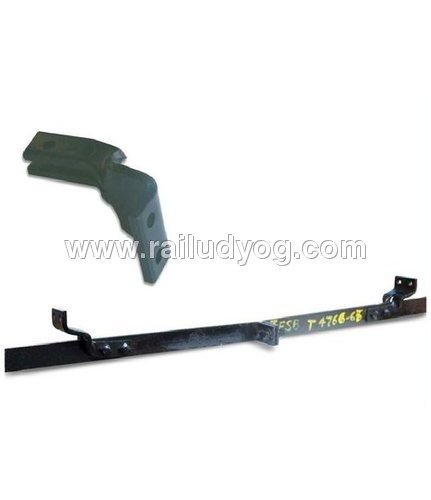
Railway Insulated and Stretcher Bar
3800.00 - 4500.00 INR/Set
Product Details:
- Technics Forged / Precision Engineered
- Technology Insulated Bar Technology
- Color Black
- Weight Approx. 12-15 kg (varies by design)
- Type Rly Track Insulated Stretcher Bar
- Material M.S
- Hardness Up to 45 HRC
- Click to View more
X
Railway Insulated and Stretcher Bar Price And Quantity
- 10 Set
- 3800.00 - 4500.00 INR/Set
Railway Insulated and Stretcher Bar Product Specifications
- Rly Track Insulated Stretcher Bar
- Approx. 12-15 kg (varies by design)
- Black
- CNC Machined Ends
- Black
- Insulated Bar Technology
- M.S
- Corrosion Resistant Coating
- Up to 45 HRC
- Forged / Precision Engineered
- Used in Railway Track Points/Crossings
- IS:2062/EN8/EN9
- Epoxy/Polymer Sleeve
- High Electrical Insulation
- 370-410 MPa
- As per Indian Railway Standards
- -20C to +55C
- 22 mm to 32 mm (according to requirements)
Railway Insulated and Stretcher Bar Trade Information
- KOLKATA
- Cash Advance (CA), Cash in Advance (CID)
- 50 Set Per Month
- 30 Days
- standard
- Asia, Africa
- All India
- ISO 9001:2015
Product Description
We have built our strong presence in the marketplace over the years by staying resourceful for the customers who require best quality of Railway Insulated And Stretcher Bar at affordable prices. Our firm is following the latest international standards that are set in railway sector in order to provide the most qualitative and useful products to the customers. The work approaches that we follow allow us to meet their every single requirement for this product with absolute professionalism and punctuality.
Rail Insulated And Stretcher Bar Specifications:
- Material: Mild Steel
- Finishing Type: Polished
- Stretched Painting Canvas: Yes
- Size: Depend on requirement
Superior Insulation and Mechanical Performance
Combining high-strength M.S with epoxy or polymer insulation, these stretcher bars provide excellent electrical resistance and impressive durability. The design not only meets Indian Railway Standards but also ensures safe signal transmission and operational longevity at railway track points and crossings.
Tailored Engineering for Railway Needs
Available in standard grades IS:2062, EN8, and EN9, with hole sizes between 22 mm and 32 mm, each insulated stretcher bar is CNC machined to precise specifications. Black corrosion-resistant finish and robust construction offer enhanced protection in demanding environments.
Reliable Exporter, Manufacturer, and Supplier
As a trusted exporter and manufacturer in India, we supply high-quality insulated railway stretcher bars. Our products are precision engineered using advanced insulated bar technology, ensuring every piece meets rigorous compliance and functional standards within the railway industry.
FAQs of Railway Insulated and Stretcher Bar:
Q: How are insulated and stretcher bars used in railway track points and crossings?
A: Insulated and stretcher bars are installed at track points and crossings to securely connect rails and maintain correct alignment. Their insulation prevents electrical current leakage, making them essential for signaling and safety systems in railway networks.Q: What materials and standards are the insulated stretcher bars manufactured with?
A: These bars are manufactured from mild steel grades IS:2062, EN8, or EN9 and insulated with epoxy or polymer sleeves. All products adhere to Indian Railway Standards for strength, durability, and electrical insulation.Q: When should I replace a railway insulated stretcher bar?
A: Replacement is advised if the bar shows visible wear, reduced electrical resistance, deformation, or corrosion. Scheduled inspections should guide maintenance teams for timely replacement to preserve track safety and signaling reliability.Q: Where can these insulated stretcher bars be utilized?
A: They are primarily used at railway track points and crossings where rail alignment and electrical insulation are critical. Their high electrical resistance makes them suitable for diverse climatic conditions, ranging from -20C to +55C.Q: What is the manufacturing process for these insulated and stretcher bars?
A: Manufacturing involves forging or precision engineering of mild steel followed by CNC machining for exact hole sizes and shaped ends. After shaping, the bars are coated for corrosion resistance and fitted with epoxy or polymer insulation sleeves.Q: How do these bars benefit railway operations?
A: The high electrical insulation and robust mechanical properties enhance safety by preventing signal short circuits, ensuring consistent track alignment, and reducing the risk of system failures in railway operations.Q: What are the advantages of the corrosion resistant coating on the stretcher bars?
A: The corrosion resistant coating extends the service life of the bars, protects against harsh weather and environmental influences, and minimizes maintenance intervals, lowering long-term operational costs for railway networks.Tell us about your requirement

Price:
Quantity
Select Unit
- 50
- 100
- 200
- 250
- 500
- 1000+
Additional detail
Mobile number
Email

Other Products in 'Railway Spares' category


Contact Details
RAIL UDYOG
GST : 19AEYPP3686F1ZL
- 20/1, Shalimar Road, (Shalimar Station), Howrah - 711103, West Bengal, India
- Phone :08045477067
- Send Inquiry
 Send Inquiry
- Mr S. Poddar (Proprietor)
- Mobile :08045477067
- Mr. Sushil poddar
- Mobile :08045477067


 |
RAIL UDYOG
All Rights Reserved.(Terms of Use) Developed and Managed by Infocom Network Private Limited. |
